PaymentProcessingMethod — 代收付 vs 直收付
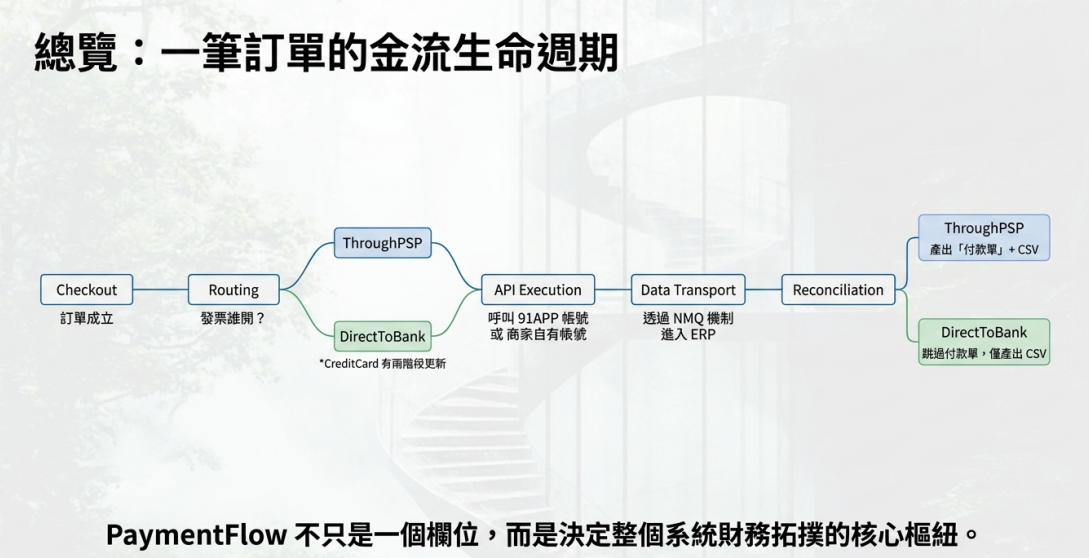
這筆錢,是先流過 91APP 的信託帳戶,還是直接進商家的銀行?
1 | public enum PaymentProcessingMethodEnum |
這個決策影響的不只是金流 API 的選擇,更影響到發票開立方、財務對帳範圍,以及整個 ERP 的付款單計算邏輯
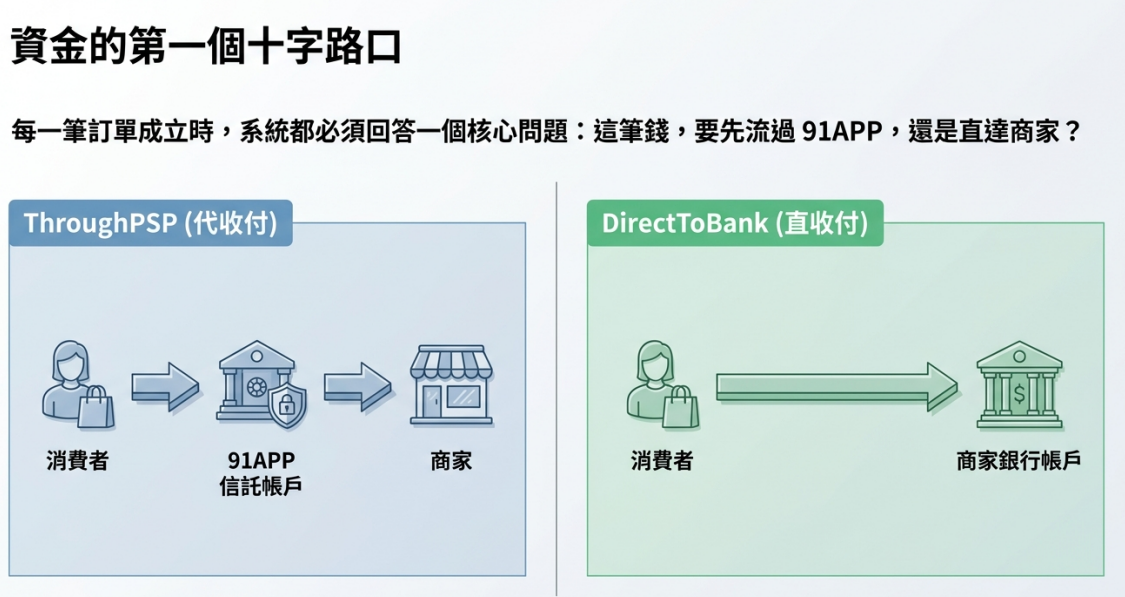
兩條路的核心差異
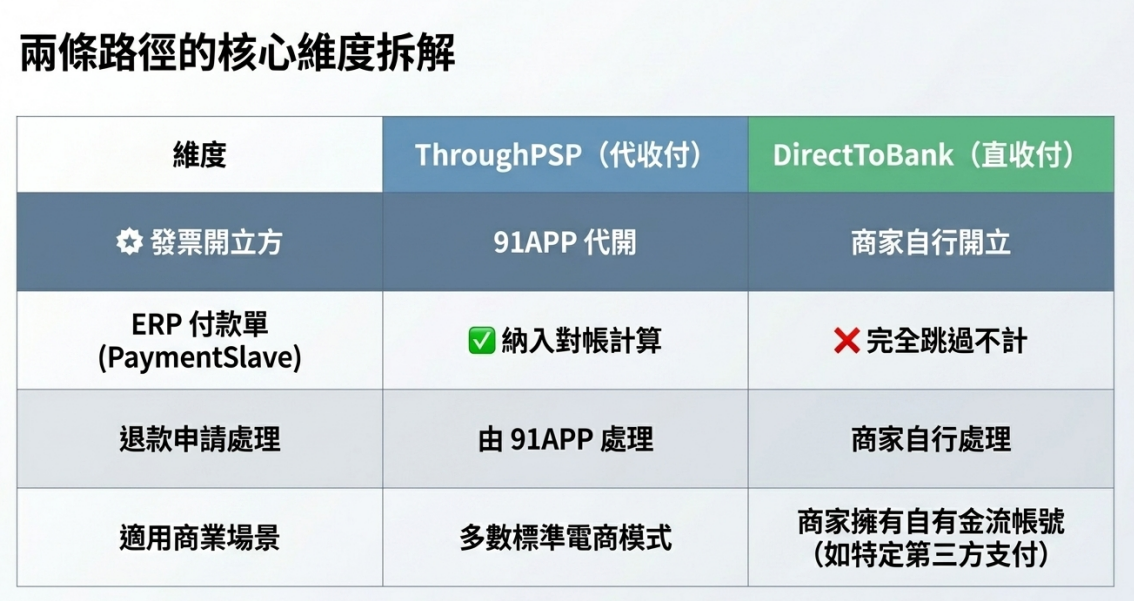
| 維度 | ThroughPSP(代收付) | DirectToBank(直收付) |
|---|---|---|
| 錢的流向 | 消費者 → 91APP 信託 → 商家 | 消費者 → 商家銀行(直接) |
| 發票開立方 | 91APP 代開 | 商家自行開立 |
| ERP 付款單 | ✅ 納入對帳 | ❌ 完全跳過 |
| 退款申請 | 91APP 處理 | 商家自行處理 |
| 適用場景 | 多數電商模式 | 商家自有金流(如特定第三方帳號) |
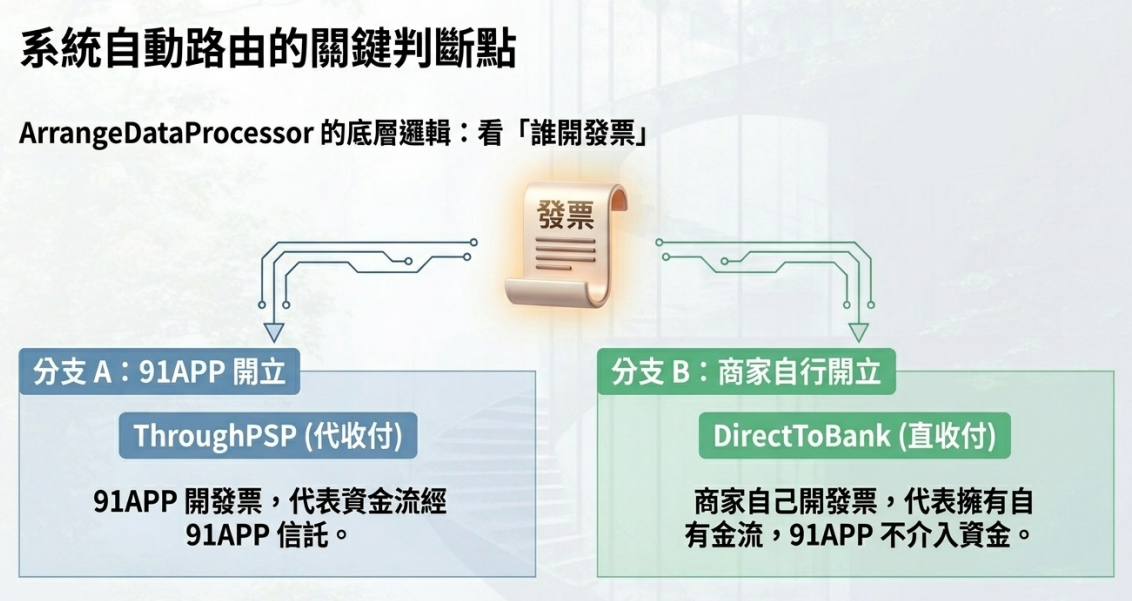
判斷依據:發票開立方式
核心判斷邏輯在 ArrangeDataProcessor.DetermineDefaultPaymentProcessingMethod():
flowchart TD
    A["讀取商店設定\nInvoiceIssueTypeDef"] --> B{"發票由誰開?"}
    B -->|"ShopIssue\n商家自行開立"| C["DirectToBank\n直收付"]
    B -->|"其他(91APP 代開)"| D["ThroughPSP\n代收付"]

    style C fill:#D4813A,color:#fff
    style D fill:#4A7CB5,color:#fff
白話說:只要發票是 91APP 開的,錢就走 91APP 信託(代收付)。商家自己開發票代表他們有自己的金流帳號,91APP 就不介入資金流動
在 mweb 建單流程(CompleteForNewCartV2)的 Processor Pipeline 中,ArrangeDataProcessor 負責計算並寫入 context:
flowchart LR
    A["CompleteForNewCartV2"] --> B["ArrangeDataProcessor\nArrangePaymentProcessingMethod()"]
    B --> C{"信用卡類?\nStripe / 91Payments"}
    C -->|是| D["先寫 ThroughPSP\n待授權後由\nUpdateTGByMerchantId() 修正"]
    C -->|否| E["GetPaymentProcessingMethod()\n讀 AppSetting + InvoiceIssueType"]
    E --> F["context.PaymentProcessingMethod\n= 最終值"]
    F --> G["TradesOrderGroup_PaymentProcessingMethodDef\n寫入 DB"]

    style B fill:#4A7CB5,color:#fff
    style D fill:#D4813A,color:#fff
    style F fill:#5BA85B,color:#fff
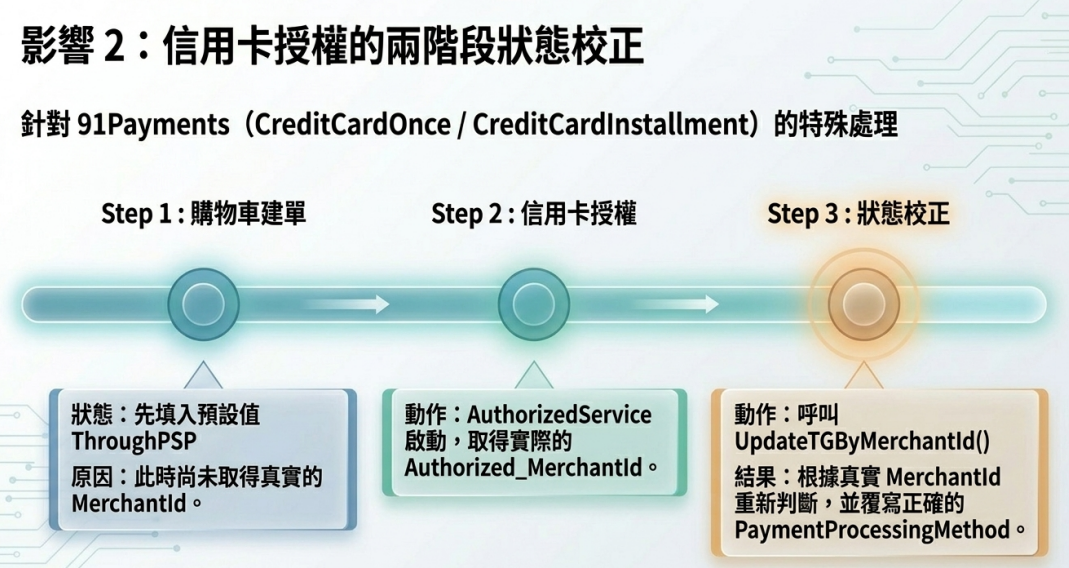
信用卡的特殊兩階段(僅限 91Payments)
91Payments(CreditCardOnce / CreditCardInstallment)因為授權後才能拿到 MerchantId,所以:
- 建單時先填
ThroughPSP(預設) - 授權成功後,
AuthorizedService取得Authorized_MerchantId,呼叫PaymentProcessingMethodService.UpdateTGByMerchantId()根據實際 MerchantId 重新判斷並更新
對 LinePay / JKO / EasyWallet 的影響
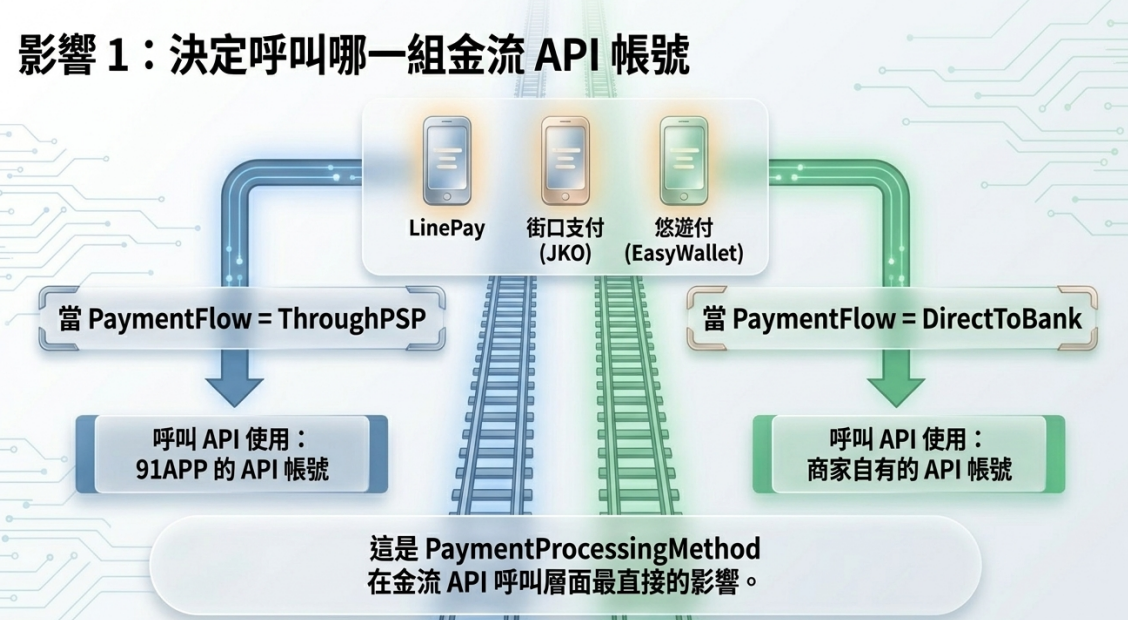
這三種付款方式依賴 PaymentProcessingMethod 來決定用哪個 API 帳號:
1 | // 偽碼 |
這是整個欄位在金流 API 呼叫層面最直接的影響:代收付用 91APP 的 API 帳號,直收付用商家自己的 API 帳號
怎麼流到 ERP?
flowchart TD
    A["mweb\nArrangeDataProcessor\n計算 PaymentProcessingMethod"] --> B["TradesOrderGroup_PaymentProcessingMethodDef\nWebStore DB"]
    B -->|"NMQ: TransToERPTmpV2Process\ncsp_ImportWebStoreDBTradesOrdersToERPDB\n(Stored Procedure)"| C["SalesOrderGroup_PaymentProcessingMethodDef\nERP DB"]
    C --> D["SalesOrderGroupPayProfileType_\nPaymentProcessingMethodDef\nERP DB"]
    C --> E["PaymentSlave_PaymentProcessingMethodDef\nERP DB"]
    C --> F["PaymentRequest_PaymentProcessingMethodDef\nERP DB"]

    style A fill:#4A7CB5,color:#fff
    style B fill:#7B5EA7,color:#fff
    style C fill:#5BA85B,color:#fff
NMQ 搬運機制
WebStore 的 NMQ(TransToERPTmpV2Process)透過 Stored Procedure csp_ImportWebStoreDBTradesOrdersToERPDBSourceTablesByOrderId_Mall 將 TradesOrder 資料搬到 ERP 暫存表,再由 TransToERPV2 Job 寫入正式 ERP DB
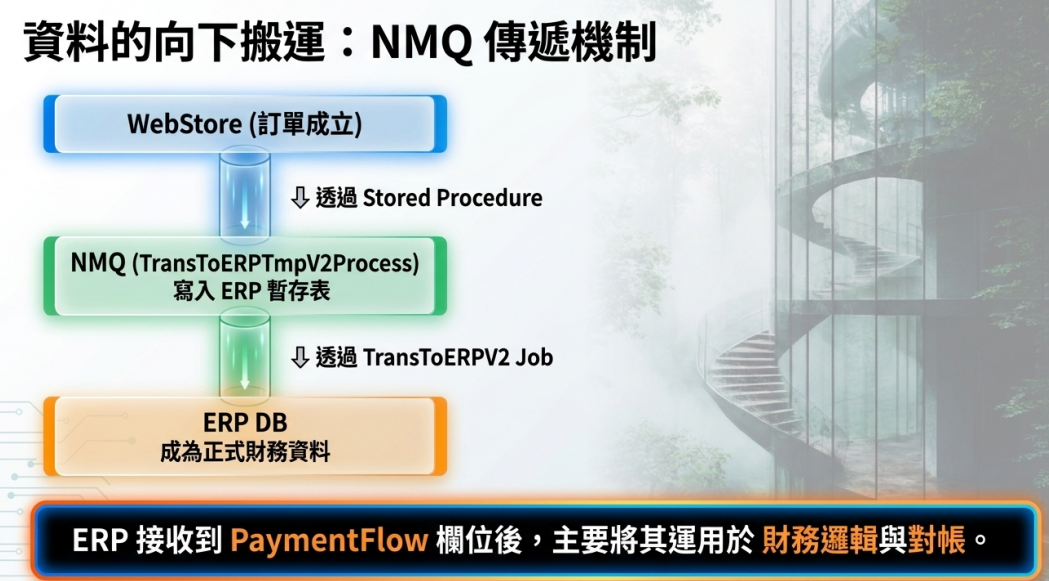
ERP 對 PaymentProcessingMethod 的使用集中在財務邏輯,有三個核心場景。
在看程式碼之前,先理解這兩份財務憑證的業務用意:
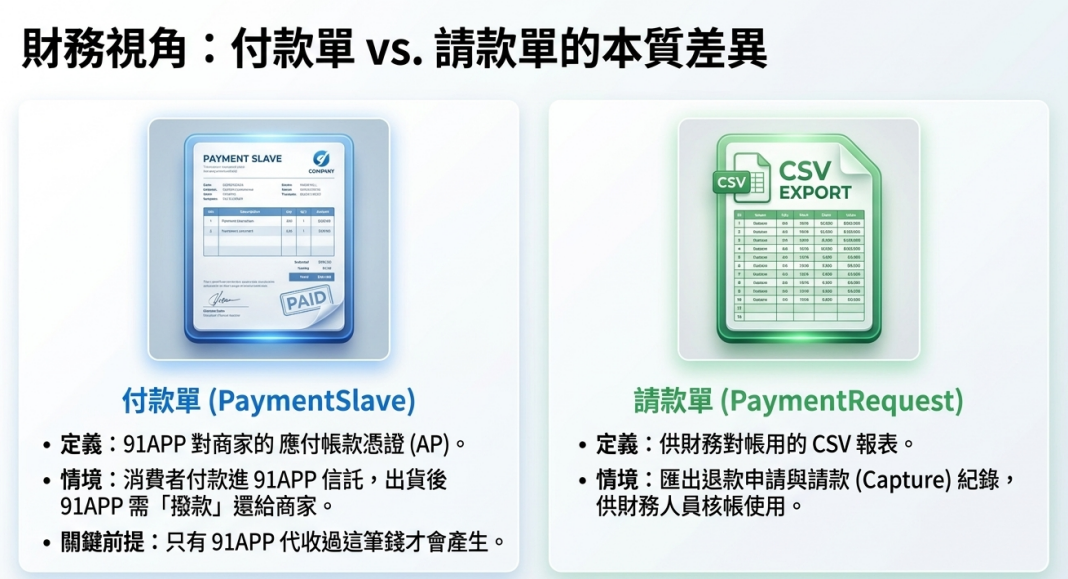
付款單(PaymentSlave)— 91APP 撥款給商家的憑證
情境:消費者用 LinePay 代收付結帳,錢先進 91APP 信託帳戶。出貨後,91APP 要把這筆錢「還」給商家。
1 | 消費者 → 91APP 信託帳戶(代收) |
付款單本質是91APP 對商家的應付帳款憑證,只有 91APP 代收過這筆錢才會產生。
請款單(PaymentRequest)— 財務對帳的 CSV 報表
信用卡的「請款」(Capture)是另一個概念:信用卡授權(Auth)後,銀行只是預留額度,還沒真正扣款;出貨後才向銀行正式請款(Capture),錢才真的動。
1 | 授權(Auth) → 銀行預留額度,不扣款 |
ERP 的「請款單」是財務匯出的 CSV 對帳報表,含括退款申請與請款紀錄,讓財務人員核帳用
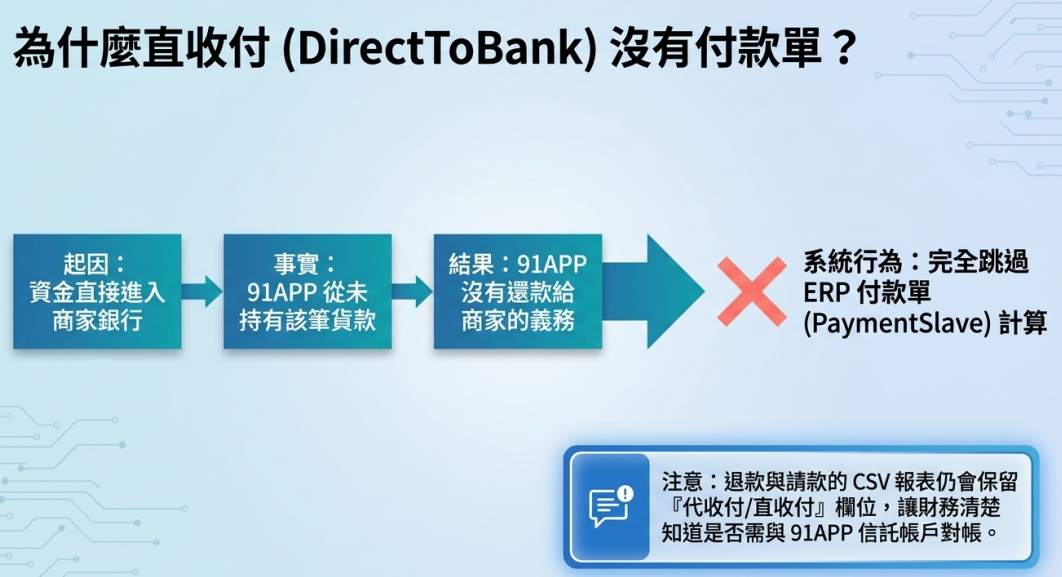
付款單對帳 — 直收付直接排除
直收付的錢沒有流過 91APP 信託,91APP 從未持有這筆錢,自然沒有「要還給商家」的義務 → 完全跳過付款單計算。
1 | // PaymentManager.cs |
請款單 / 退款申請匯出 — 帶入 CSV 欄位
1 | // RefundRequestManager.cs — 退款申請 CSV 匯出 |
退款申請和請款單的匯出 CSV 最後都有一欄「代收付/直收付」,讓財務在對帳時清楚知道這筆錢的資金流向,決定要不要跟 91APP 的信託帳戶對帳。
Stripe 的特殊性:跳脫這個邏輯
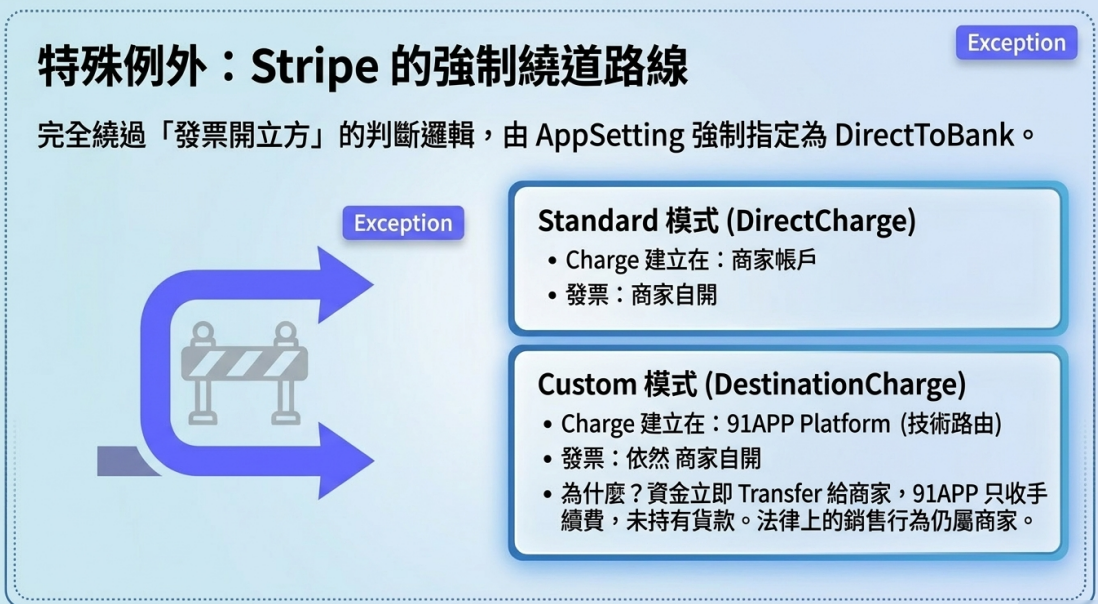
Stripe(CreditCardOnce_Stripe)完全繞過上述判斷,由 AppSetting 強制指定:
1 | <add key="Prod.PayType.DirectToBank" |
不管商店的 InvoiceIssueTypeDef 是什麼,Stripe 永遠是 DirectToBank。
DirectCharge vs DestinationCharge 的發票影響
| Stripe 帳號類型 | payment_flow | Charge 建在哪 | 發票開立方 |
|---|---|---|---|
| Standard | DirectCharge | 商家 Connected Account | 商家自行開立 |
| Custom | DestinationCharge | 91APP Platform(技術路由) | 商家自行開立 |
兩種模式下發票都是商家開,原因如下:
- DirectCharge:Charge 本身就在商家帳戶,商家是法律上的收款方,自然自開發票。
- DestinationCharge:雖然 Charge 建在 91APP Platform,但資金立即 transfer 給商家,91APP 只收
application_fee(手續費),從未持有貨款。法律上的銷售行為仍屬商家,發票應由商家開立。
1 | DestinationCharge 的發票邏輯: |
三者關係總覽
flowchart TD
    A["InvoiceIssueTypeDef\n商店發票設定"] -->|Issue / OverseaNotIssue| B["ThroughPSP\n91APP 代開發票\n91APP Channel 帳號"]
    A -->|NotIssue / NoInvoiceRequired| C["DirectToBank\n商家自開發票\n商家 Channel 帳號"]

    D["Stripe\nCreditCardOnce_Stripe"] -->|AppSetting 強制| C

    E["Stripe Standard\nDirectCharge"] --> F["商家 Connected Account\n商家自開發票"]
    E2["Stripe Custom\nDestinationCharge"] --> G["91APP Platform 路由\n→ 立即 transfer 給商家\n商家自開發票"]

    style B fill:#4A7CB5,color:#fff
    style C fill:#D4813A,color:#fff
    style D fill:#7B5EA7,color:#fff
    style F fill:#5BA85B,color:#fff
    style G fill:#5BA85B,color:#fff